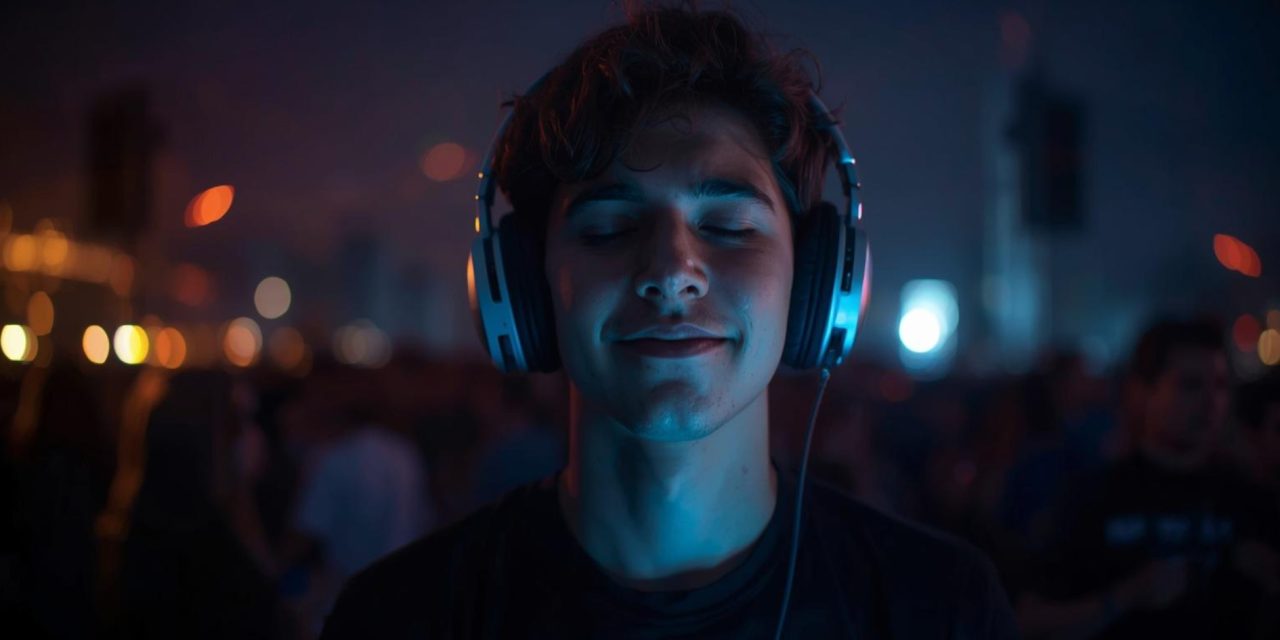
Understanding why euphoric drops hit so hard isn’t just about theory—it’s about experience. That moment when a track builds, stretches your anticipation, and then finally releases isn’t random. It’s carefully shaped to trigger both emotional and physical reactions in the listener.
What makes it even more interesting is that the same principles apply across genres, but in EDM—especially soulful EDM—they’re refined into something more intentional. The drop isn’t just a peak; it’s a payoff that connects feeling, memory, and sound in a way that feels almost instinctive.
Neuroscience of Music and Emotion
Research shows that the brain releases dopamine during key musical moments, especially during well-executed drops. But that reaction doesn’t come from the drop alone. It comes primarily from the journey leading into it.
Artists like Avicii understood this balance well. In tracks like Wake Me Up, the emotional weight is built through melody and storytelling first, making the drop feel like a natural release rather than a sudden switch.
Similarly, Calvin Harris often uses clean melodic structures to guide listeners into that moment, ensuring the drop enhances the feeling instead of overpowering it.
Even in classical music, composers like Ludwig van Beethoven used tension and resolution to create emotional peaks. EDM simply compresses that idea into shorter, more immediate experiences.
In soulful EDM, this becomes even more refined. The emotional core is established early, so when the drop arrives, it doesn’t just excite—it resonates.
Sound Frequencies and Their Effects
Certain sound ranges and textures naturally amplify emotional response, especially when paired with strong musical phrasing. But in practice, it’s not about hitting a specific frequency—it’s about how sound is shaped and layered.
Modern tools like Serum and Massive allow producers to sculpt these moments with precision, but the real impact comes from restraint and intention.
In soulful EDM, you’ll often notice:
- Drops that breathe instead of overwhelm
- Low-end that supports rather than dominates
- Melodic layers that carry emotion through the drop
Instead of relying purely on intensity, the focus shifts to feeling sustained through sound, which is why these drops tend to have more replay value and emotional depth.
Conclusion
The euphoric drop works because it sits at the intersection of science and musicianship. It taps into how we process anticipation and reward, but it only becomes meaningful when shaped with intention.
That’s where soulful EDM stands out. It doesn’t just aim for the reaction—it builds toward connection. And when that balance is right, the drop stops being just a moment in the track and becomes the reason you come back to it.
Which track do you keep replaying—not because it’s new, but because that one moment still hits the same every time?Find more of those repeat-worthy moments with DLK Soulful EDM, where the connection doesn’t wear off.
