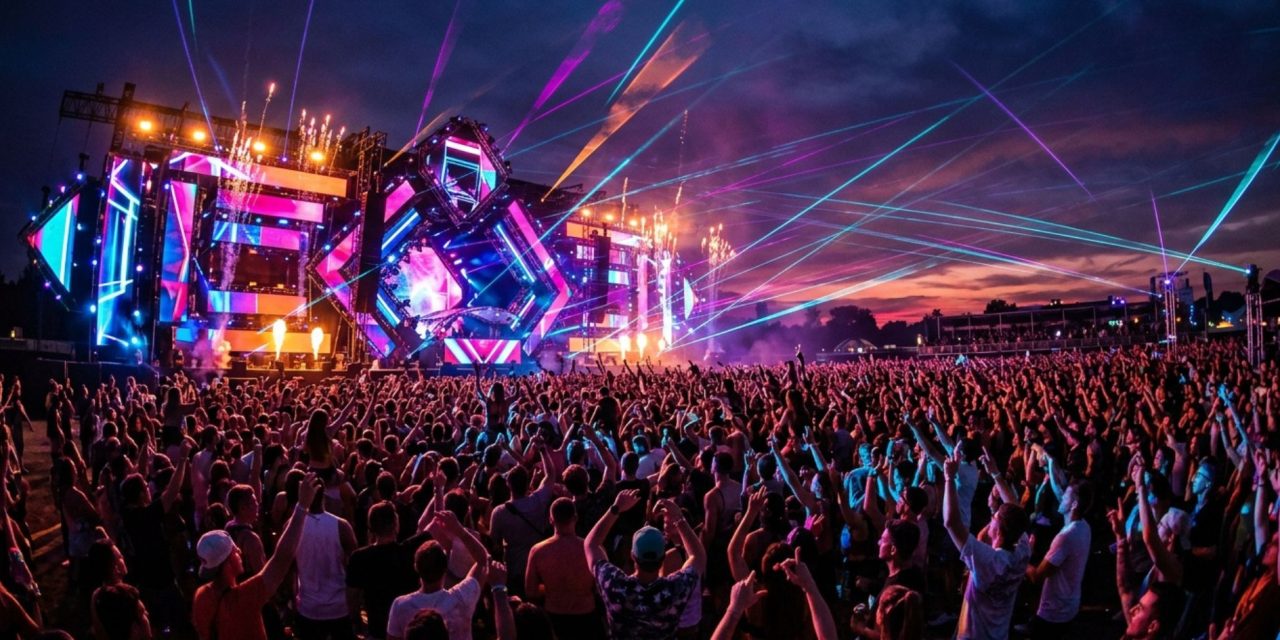
A festival crowd can spend minutes waiting for a drop, unsure whether the next moment will bring euphoria, a heavy bassline, or something completely unexpected. Then the music shifts, and thousands of people react together.
That anticipation is part of electronic music’s appeal. Producers are increasingly exploring how melody, atmosphere, rhythm, and sound design can create emotional moments without relying on predictable formulas.
As festival music continues to evolve, melodic techno, future bass, Afro house, and other genre-blending styles offer different approaches to building energy. Their development points toward a future where emotional impact and experimentation matter alongside sheer volume.
Emerging Genres and Styles
Melodic techno and future bass demonstrate two different approaches to emotional electronic music. Melodic techno often relies on hypnotic patterns, evolving synths, tension, and gradual development. Future bass is associated with expressive chord progressions, bright synth textures, vocal chops, and dynamic drops.
Artists such as Lane 8 and Flume provide useful examples of how melody and atmosphere can shape electronic music. Lane 8’s work often leans toward melodic and deep house, while Flume’s productions incorporate experimental textures and bass-driven arrangements. Their approaches should not be treated as identical, but both demonstrate how electronic music can create emotional movement through production choices.
Future bass developed during the 2010s, with Flume’s remix of Disclosure’s You & Me frequently identified as an important release in the genre’s development. Its combination of expressive synths, vocal manipulation, and energetic drops helped establish a sound that influenced later melodic bass artists.
Melodic techno has also continued to occupy a visible place in festival culture. Contemporary festival programming includes artists and stages connected to melodic techno, house, and related electronic styles. However, the presence of a genre at a particular festival does not automatically prove a universal shift in audience preferences.
Emotional Drops and the Changing Festival Experience
The emotional drop is not simply about making the loudest section of a track arrive at the right moment. It can involve a carefully controlled release of tension, where melody, silence, rhythm, and bass work together.
A melodic techno track might begin with atmospheric textures and a restrained rhythm. Gradually, new layers enter, the tension increases, and the drop delivers a stronger rhythmic or melodic payoff. The effect depends on the relationship between what the listener expects and what the producer eventually delivers.
Future bass can approach that release differently. A producer might use swelling chords, vocal fragments, sidechain movement, and a sudden expansion in the arrangement. The result can feel dramatic without depending entirely on a conventional four-on-the-floor structure.
These techniques give festival artists more ways to shape audience reactions. A powerful moment might come from a heavy bassline, a familiar vocal, an unexpected breakdown, or a melody that returns after an extended build.
Genre Fusion and Festival Programming
Festival music is not developing along one straight path. Different genres continue to overlap, with producers combining sounds from house, techno, bass music, Afro house, and other traditions.
Recent industry research from Splice and MIDiA Research highlights genre fluidity and localised scenes as important influences on music creation. Its 2026 report identifies Afro house as a major growth area, alongside developments in melodic house and faster electronic styles.
This does not mean every festival will follow the same programming direction. Festival lineups reflect audience demographics, booking strategies, regional tastes, and the identity of each event.
The broader trend is the increasing space for artists who do not fit neatly into one genre. Producers can combine familiar rhythmic structures with unusual textures, cultural influences, and emotionally driven arrangements.
For audiences, this creates more variety. For artists, it offers opportunities to develop a recognisable sound without following a single established template.
What This Means for the Future
Emotional drops are likely to remain useful because they give producers a way to shape anticipation and release. Their future development will depend on creativity rather than simply making every drop bigger than the previous one.
Melodic techno, future bass, and genre-blending electronic styles show how producers can approach emotion through different combinations of sound and structure. Meanwhile, changing festival programming creates room for both established genres and emerging hybrids.
The most interesting developments may come from artists who understand a track’s emotional core while remaining willing to experiment with its arrangement. In a crowded festival environment, surprise, atmosphere, and musical identity can be just as important as intensity.
Conclusion
Festival music continues to evolve through new genres, production techniques, and combinations of familiar sounds. Emotional drops remain an important tool, but their impact depends on the tension and musical choices that lead into them.
Melodic techno, future bass, and other evolving styles demonstrate how electronic music can balance atmosphere with energy. As producers explore new approaches, festival audiences may encounter more varied ways to experience anticipation, release, and connection through sound.
You know that moment when a festival track feels so good you wish you could hear it for the first time again? DLK Soulful EDM explores the creative choices behind those moments and the new sounds that could make your next favourite festival memory.
