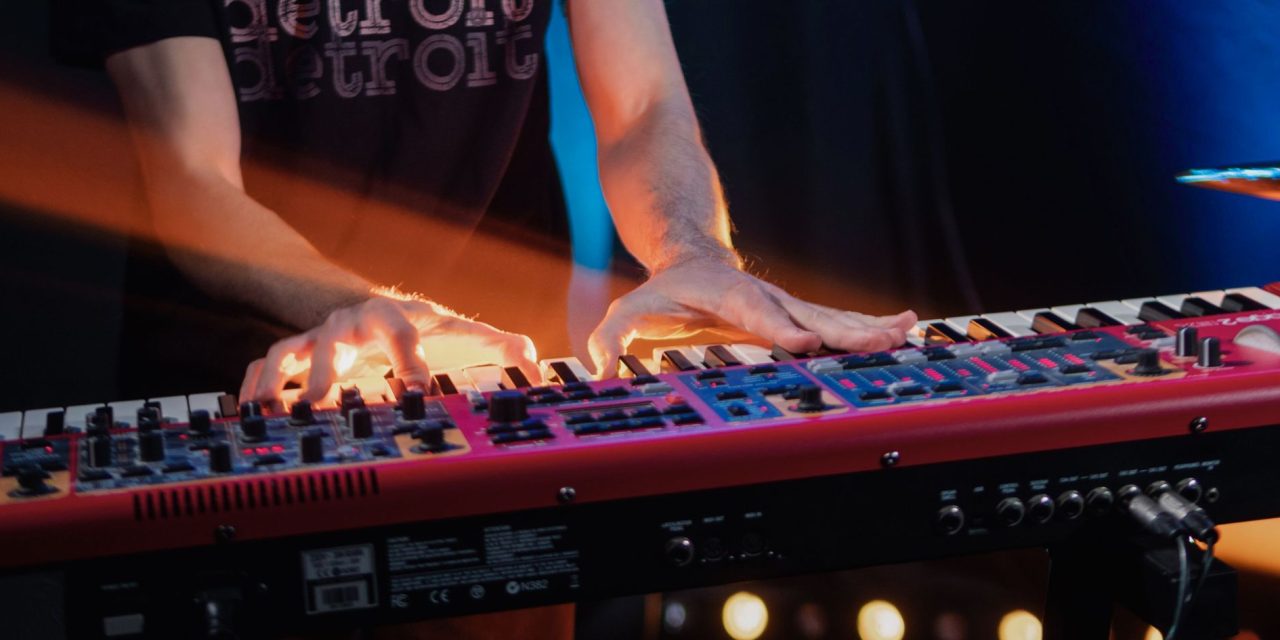
Some EDM sounds grab your attention instantly. Piano chords can do something slightly different: they can make a track feel familiar, expressive, and emotionally grounded.
That quality is especially useful in soulful EDM, where melody and harmony often carry as much weight as the beat. A piano does not have to dominate the arrangement to become one of its most memorable elements.
Its natural timbre, expressive dynamics, and imperfect human qualities can give electronic productions a sense of warmth. The right chord progression can then turn that warmth into an emotional anchor.
Why Piano Chords Connect Emotionally
Piano has a rich harmonic character that comes from the combination of its attack, resonance, overtones, and changing dynamics.
That makes its sound different from a simple electronic waveform. Research into musical timbre has found that the instrument carrying a melody can influence how listeners perceive its emotional character. Piano and electronic timbres, for example, can lead to different emotional judgments even when the underlying melody is controlled.
The way a piano is played matters too. Timing and amplitude are important expressive tools, and listeners can detect changes in these qualities when judging emotional expression.
That gives piano chords an interesting role in soulful EDM. They can provide harmonic movement while also carrying subtle changes in intensity and timing.
Chord progressions built around minor sevenths, ninths, suspended chords, and other extensions can add tension without making the arrangement feel overly complicated.
A suspended chord can delay the feeling of resolution. A ninth can add color and openness. Minor harmony can create a more reflective character before another chord provides release.
These details give the listener something to follow beneath the beat. Instead of relying entirely on a huge drop, the track can create emotional movement through harmony.
Human Touch vs. Synthetic Sounds
A perfectly programmed piano part can sound clean, but clean does not always mean expressive.
Small differences in timing, velocity, articulation, and note length can make chord stabs feel less mechanical. Research on expressive piano performance has shown that timing variation can contribute strongly to how listeners perceive emotional expression.
That does not mean every MIDI note needs to be deliberately pushed off the grid. Excessive randomness can make a part feel sloppy rather than human.
The better approach is controlled variation.
Add Movement to Chord Timing
Start by listening to where the chords sit against the groove.
Some off-beat stabs may work better slightly behind the beat, while others can benefit from a subtle push forward. The goal is not to create obvious timing errors.
It is to stop every chord from feeling like it was stamped onto the grid by the same machine.
Swing can also help, particularly when the surrounding groove already has some rhythmic looseness. Rather than applying a fixed percentage blindly, adjust it until the chords sit naturally with the drums and bass.
Let Velocity Shape the Performance
Velocity is another easy way to make sampled piano feel more expressive. If every chord lands with the same force, the part can become flat even when the progression is interesting. Varying velocity allows certain chords or notes to sit forward while others become softer background movement.
Sampled pianos with multiple velocity layers can make these changes even more convincing. The instrument responds differently as you play harder or softer, creating variation that resembles a more natural performance.
This becomes especially useful in soulful EDM because the piano can respond to the phrasing of the track. A quieter verse might use restrained chords, while a build can gradually bring them forward.
Use Filter Movement Without Overdoing It
Static piano textures can sometimes become predictable during longer sections.
A gentle filter movement can give the chords a sense of motion without changing the actual harmony. Slowly opening the sound during a build can make the piano feel brighter as the arrangement approaches its peak.
The same idea can work in reverse. Pulling some high-frequency energy away during a quieter section can create space for vocals, pads, or other melodic elements.
The important part is that the movement should support the arrangement. Automation should not exist simply because there is an automation lane available.
Voice Leading and Chord Inversions Matter
Humanization can add character, but the underlying harmony still needs to work.
Voice leading helps chords move smoothly by keeping individual notes close to their previous positions. Instead of jumping between completely different shapes, selected notes can remain or move by smaller intervals.
Chord inversions can create the same sense of continuity.
This matters because the emotional quality of a piano progression does not come only from choosing the right chord names. The way those chords connect can determine whether the progression feels smooth, tense, spacious, or awkward.
A soulful EDM piano part can therefore sound much richer when its inversions support the movement of the melody and bass.
It also leaves more room for other elements. The piano does not need to occupy every register when its chord voicings already create movement within a smaller space.
Conclusion
Piano chords can bring something into soulful EDM that another synth layer may not provide: a sense of human expression.
The combination of expressive timing, velocity changes, harmonic color, voice leading, and thoughtful chord inversions can make the instrument feel like part of the performance rather than another programmed layer.
The goal is not to make electronic music sound completely acoustic. It is to let a little human imperfection live inside the electronic arrangement.
When the piano feels expressive, and the surrounding production gives it room, those chords can become the emotional thread that listeners remember.
Have you ever added a piano to an EDM track and noticed that the whole thing suddenly felt more alive? DLK Soulful EDM gets into those musical details where a familiar instrument, a strong progression, and a little human movement can change the character of an electronic track.
