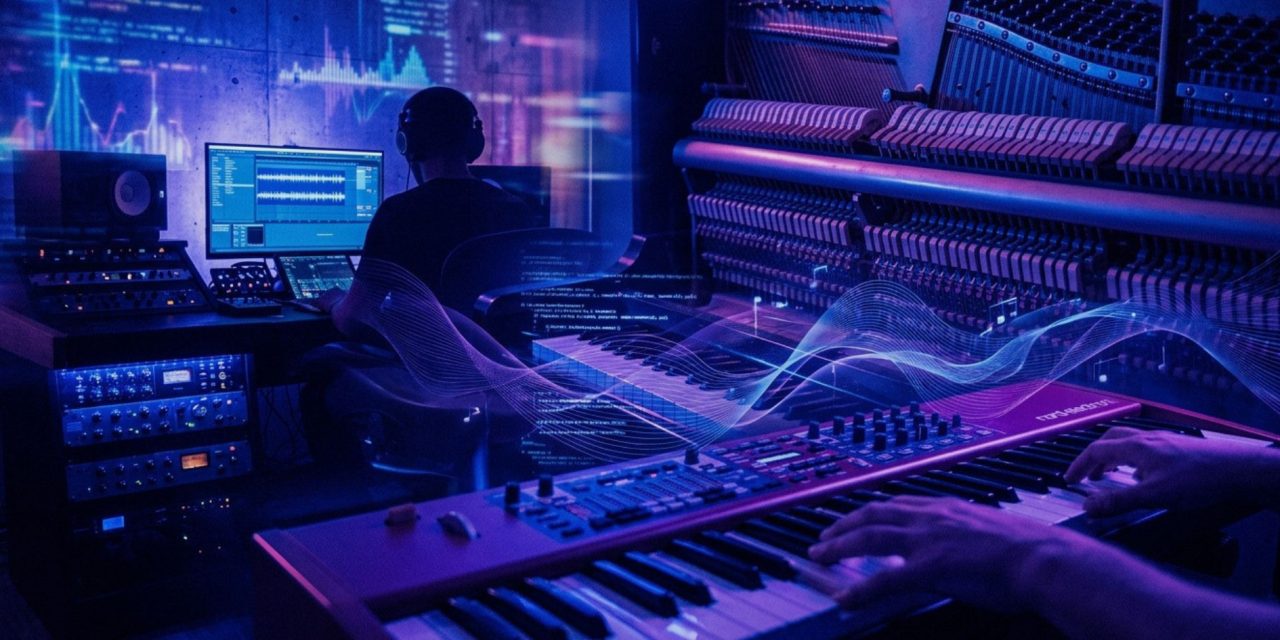
What is it about a piano chord that can make a dancefloor feel suddenly nostalgic, emotional, and completely alive?
Long before soulful EDM had its modern sound, piano was already helping electronic music connect with listeners on a human level. From Rhodes and Wurlitzer tones in early house and disco to sampled grand pianos in today’s cross-genre anthems, piano chords in soulful EDM have survived every production trend thrown at them.
The technology has changed. The role of the piano hasn’t. Its familiar tone, expressive harmonies, and ability to sit beautifully beneath a heavy groove have made it one of electronic music’s most enduring ingredients.
The Timeless Role of Piano in EDM
Piano chords provide something that can be surprisingly difficult to recreate with layers of modern synthesis: immediate emotional recognition.
Their harmonic movement can establish tension, warmth, nostalgia, or release before the rest of the production has even arrived. That makes piano particularly effective in soulful EDM, where emotional connection matters as much as rhythmic impact.
Modern tracks continue to demonstrate how effectively the instrument translates into electronic production. Zedd’s Clarity, Alan Walker’s Faded, and Alesso’s Heroes each use piano-based harmonic ideas differently. Yet, all demonstrate the instrument’s ability to carry an emotional centre within a highly produced arrangement.
The piano’s natural attack, decay, sustain, and release also give producers plenty to work with. Sidechain compression, reverb, saturation, and careful layering can reshape that familiar sound without removing the qualities that make it recognizable.
That combination of familiarity and flexibility is a major reason the piano keeps returning.
Historical Roots: Piano in Early Electronic Music
The piano’s relationship with electronic music began long before today’s festival stages.
Electric pianos such as the Fender Rhodes and Wurlitzer helped bridge traditional musical performance and emerging electronic production. Their tones retained some of the warmth and expressive character associated with live musicians while fitting naturally into increasingly electronic arrangements.
This mattered because early electronic music was not created in a vacuum. Producers were borrowing from disco, funk, soul, and other styles where keyboards already played important harmonic roles.
The result was not a complete replacement of traditional instruments with synthesizers. Instead, producers began changing how familiar instruments were recorded, sampled, processed, and placed within electronic arrangements.
Grand piano samples and upright piano recordings became useful sources of harmonic colour. Producers could take a familiar instrument and place it inside an entirely different sonic environment.
Piano timbre could provide the harmonic foundation while drums, bass, synths, and effects handled the movement around it.
That flexibility helped establish piano chords as a lasting part of electronic music rather than a temporary production trend.
House and Disco Influences
The connection became particularly clear as house music developed from disco, house and other dancefloor traditions.
Chicago house producers experimented with electric piano sounds, processing them through effects and hardware to create warm, slightly imperfect textures. Those sounds could support a driving rhythm while retaining the emotional character of soul and disco.
Piano harmony became especially powerful through minor seventh and extended chord voicings. These gave producers more emotional colour without sacrificing the rhythmic momentum required on the dancefloor.
Several production techniques developed around this approach.
Rhodes sounds could be processed with saturation and chorus to create warmth and movement. Wurlitzer tones could be layered with brass or synthesizer elements for greater harmonic density. Open-position seventh chords could provide both spaciousness and low-end weight.
Velocity variation also became important as electronic musicians sought more realistic keyboard performances. Different velocity layers could reproduce changes in attack and decay, making MIDI-programmed piano parts feel less mechanical.
These techniques reflected a larger shift in electronic music production.
Producers were no longer simply asking how to make a keyboard sound electronic. They were learning how to preserve the emotional character of an instrument while giving it a place inside electronic music.
That idea would become especially important as house, disco, progressive house, and other dance styles continued evolving.
From House Roots to Soulful EDM
As electronic music expanded, the piano travelled with it.
Its role changed depending on the production style, but the underlying purpose remained remarkably consistent. Piano could introduce vulnerability into an otherwise powerful arrangement, soften a heavy production, or provide the harmonic moment that made a dance track feel like a song rather than simply a club record.
That made it particularly valuable to the development of soulful EDM.
As production became more sophisticated, producers gained countless ways to reshape piano. Samples could be pitched, chopped, reversed, filtered, layered, and processed. Acoustic recordings could be combined with synthetic textures. Live performances could sit alongside programmed drums and elaborate sound design.
Yet the piano itself remained recognizable.
That is perhaps the most interesting part of its history. Electronic music has moved through countless sounds, technologies, and production fashions, but producers continue returning to the same basic instrument because its emotional language already works.
Conclusion
The piano’s staying power in soulful EDM is not simply nostalgia.
Its history shows how successfully an instrument rooted in live performance adapted to electronic production without losing its emotional identity. From Rhodes and Wurlitzer textures in early house and disco to processed piano layers in modern EDM, the instrument has repeatedly found new ways to belong.
That is what makes it evergreen. The production around the piano may change. The chord might be sampled, played live, chopped into fragments, or buried beneath a festival-sized drop.
But when those familiar keys appear, listeners still know exactly how to feel.
What’s one piano-led EDM track that still gives you that instant “ohhh, this one” feeling? 🎹
Whether it’s a house classic or a modern soulful anthem, DLK Soulful EDM is where those emotionally charged sounds deserve another listen. Dive in and rediscover the tracks that prove some ingredients never really go out of style.
