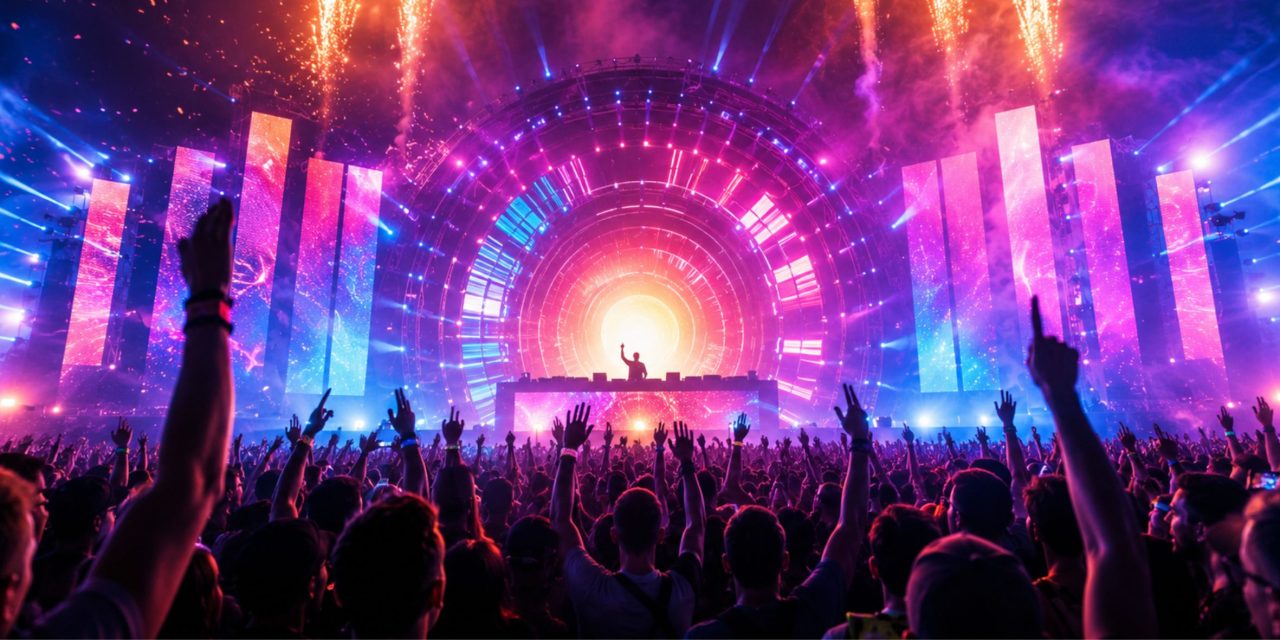
There was a time when you could predict exactly what would happen before the drop.
The vocal would rise, the crowd would get louder, someone’s friend would throw an arm around their shoulder, and suddenly thousands of people were singing the same chorus like it was the final scene of a movie. Then somewhere along the way, those big singalong moments started disappearing.
Now they’re finding their way back. As Vocal EDM reconnects with melody, emotion, and crowd participation, the singalong build in Vocal EDM is returning to festival stages, streaming playlists, and social media feeds. The sound may be evolving, but the reason people love it hasn’t changed.
Origins of the Singalong Build
The singalong build emerged during the late 1990s as trance producers began experimenting with longer vocal tension and emotional releases.
One of the earliest examples appeared in Paul van Dyk’s For an Angel (PvD Remix), where extended risers and vocal elements helped create anticipation before the payoff arrived. The approach gave listeners something to connect with emotionally before the energy peaked.
Throughout the trance era, artists such as Ferry Corsten and Above & Beyond expanded the idea. Extended vocal passages, atmospheric effects, reverb tails, and melodic layering became central ingredients in creating crowd anticipation.
By the mid-2000s, producers were stretching builds even further. Longer arrangements gave DJs more flexibility while allowing audiences to become emotionally invested in the moment before the drop.
The formula eventually moved beyond trance and into broader festival culture, where it found its largest audience.
The Peak Festival Era
Between 2011 and 2014, the singalong build became one of the defining features of mainstage EDM.
Tracks such as Swedish House Mafia’s Don’t You Worry Child demonstrated how powerful a familiar vocal could become when paired with a carefully constructed build. Rather than rushing toward the drop, producers allowed the crowd to participate in the journey.
Festival audiences embraced the format because it transformed passive listening into a shared experience.
The build was no longer simply a production technique. It became a crowd ritual.
Thousands of people singing together created moments that felt larger than the music itself. Vocal chops, harmony layers, filter sweeps, and carefully timed risers all contributed to the anticipation, but the real magic often came from the audience.
For a few years, these moments became the emotional centrepiece of many festival sets.
Decline and Evolution
Like most trends in electronic music, the singalong build eventually began to fade.
By the second half of the 2010s, streaming platforms were reshaping how producers structured songs. Tracks became shorter, arrangements became more direct, and the pressure to reach the drop quickly increased.
Extended build-ups that once lasted 30 or 45 seconds often shrank dramatically.
Streaming algorithms rewarded immediate engagement, while festival programming increasingly prioritised constant energy. The long emotional runway that defined classic singalong builds no longer fit every environment.
As a result, traditional singalong sections became less common.
The crowd-participation moment that once sat at the heart of many festival tracks was often replaced by shorter transitions, faster drops, and more streamlined arrangements.
Production Shifts
The production itself changed significantly during this period.
Producers increasingly relied on supersaw risers, white-noise sweeps, and aggressive tension-building effects rather than extended vocal passages. Vocal stacks gave way to shorter vocal chops and heavily processed edits.
Compression settings became more aggressive, snare rolls became denser, and transitions became faster.
The goal shifted from building emotional anticipation to delivering impact as quickly as possible.
These changes were not necessarily negative. They reflected evolving listener habits and the rise of new subgenres. However, they also reduced the space available for the melodic storytelling that had once defined many vocal builds.
The emotional chorus before the drop became less important than the drop itself.
Genre Fragmentation
As EDM expanded, different genres developed their own relationship with vocal builds.
Bass house often favoured short vocal edits and rapid transitions. Future rave reintroduced longer melodic sections while experimenting with darker vocal processing. Progressive house retained some of the emotional structure of earlier eras, although often in a more atmospheric form.
Meanwhile, vocal trance continued embracing extended builds and full vocal arrangements long after other genres had moved on.
These differences created multiple versions of the singalong build rather than one dominant format.
Instead of disappearing entirely, the technique fragmented across genres and evolved according to different audience expectations.
Why the Singalong Build Is Returning
The current resurgence is not simply nostalgia.
Listeners increasingly engage with tracks through social platforms where memorable vocal moments travel quickly. A powerful chorus is easier to share, sing, remember, and revisit than a purely instrumental transition.
Streaming data has also shown continued demand for emotionally driven dance music. Artists such as David Guetta, Kygo, and many newer melodic producers have gradually reintroduced longer vocal sections into their arrangements.
Modern audiences still want energy.
They just also want moments that feel human.
Today’s singalong builds often combine contemporary production techniques with the emotional DNA of earlier festival anthems. The result feels familiar without sounding dated.
The format is evolving rather than returning unchanged.
The Takeaway
The singalong build helped define some of EDM’s most memorable years because it gave audiences a role in the music itself.
Although streaming trends, production shifts, and genre fragmentation pushed the format into the background for a while, it never completely disappeared. Instead, it adapted and waited for the right moment to return.
As Vocal EDM continues embracing melody and emotional storytelling, the singalong build is proving that some ideas are simply too powerful to stay gone for long.
Be honest—what’s the last EDM chorus you accidentally sang at full volume even though nobody asked you to?
Those unforgettable vocal moments are exactly why the singalong build continues to matter. Explore more stories, sounds, and evolving trends in melodic electronic music at DLK Soulful EDM.
