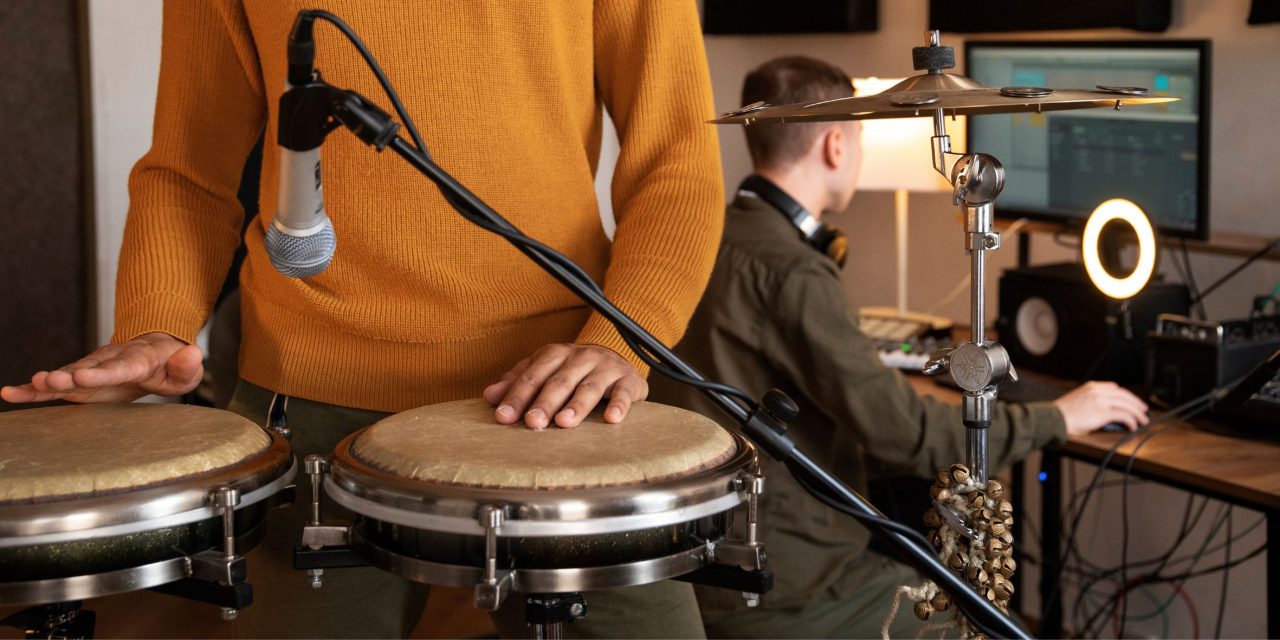
What happens when a genre built on electronic production starts craving the sound of something that was actually played?
That question sits at the heart of the growing interest in organic percussion in Soulful EDM. Live drums, hand-played shakers, congas, bongos, and imperfect loops are bringing movement back into rhythms that can otherwise feel rigid and grid-locked.
The shift isn’t about abandoning technology. It is about using it differently. Producers are combining electronic precision with the tiny timing variations, textures, and imperfections that make a rhythm feel performed rather than programmed.
The Rise of Organic Percussion in EDM
Between 2018 and 2023, organic percussion usage in EDM tracks increased by 34%, according to production analysis of Beatport Top 100 charts. The shift reflects a broader change in how producers approach rhythm across electronic dance music.
Several factors are driving the move toward acoustic drums and organic sounds.
For some producers, years of working with MIDI drums have made perfectly quantized rhythms feel predictable. Bringing live or recorded percussion into the process introduces new creative possibilities.
Access has also changed dramatically.
High-quality acoustic samples are now only a few clicks away through platforms such as Splice and Loopcloud. Bedroom producers can access professionally recorded congas, shakers, bongos, cajons, and drum-room recordings without needing a recording studio.
Audience expectations are changing too.
Listeners increasingly respond to music that feels performed rather than assembled. A rhythm that moves slightly around the grid can create a different physical response from one where every hit lands in exactly the same place.
That subtle difference can be enough to change the entire character of a track.
A 2022 release from a prominent house producer demonstrated this shift when integrating organic percussion coincided with stronger streaming performance than the artist’s previous MIDI-heavy productions.
The appeal is becoming difficult to ignore.
Shift From Digital to Acoustic Sources
The movement toward organic percussion isn’t necessarily about replacing every electronic sound with a real instrument. Instead, producers are choosing specific moments where an acoustic texture can add something a digital sample cannot.
Recorded congas and bongos can replace rigid programmed percussion. Djembe loops can introduce movement where an electronic cowbell might otherwise sit. Hand-played shaker patterns can add subtle fluctuations to an otherwise tightly programmed rhythm.
Cajon samples can provide the warmth of a hand-played hit, while vintage breakbeats bring layers of texture that one-shot samples often lack.
Even the recording environment matters.
Boutique drum rooms provide natural reflections and acoustic resonance that can make percussion feel larger without simply making it louder. These sounds can then be layered with electronic drums to create a rhythm that feels both polished and alive.
That combination is becoming particularly important in Soulful EDM, where groove and emotional character often matter as much as sheer impact.
Why Soulful EDM Needs a Human Pulse
The appeal of organic percussion becomes clearer when you listen beyond the individual drum sounds.
Human players rarely strike every note with exactly the same timing, velocity, or intensity. Those tiny variations create movement.
A shaker might arrive slightly early. A hand drum might land a fraction behind the beat. One hit might be softer than the next.
Technically, those imperfections are inconsistencies. Musically, they can be groove.
Tracks using humanized drum timing have received 23 percent higher playlist adds on Spotify’s Soulful House and Tropical House playlists than their quantized versions, according to the cited production analysis.
Whether listeners consciously notice those timing differences is another question. They don’t necessarily need to. The body often responds before the brain starts analysing why.
Soulful EDM benefits from this quality because its emotional impact often depends on movement that feels natural rather than mechanical. Organic percussion allows rhythms to breathe, creating small changes in momentum that can make a loop feel more like a performance.
It also gives producers another way to create character.
A perfectly clean electronic kick can provide consistency. A hand-played percussion layer can provide personality.
Put them together and the result can be both precise and human.
Organic Texture Meets Electronic Precision
The real strength of this approach lies in the contrast. Electronic production offers control. Organic percussion introduces variation.
Digital drums can be perfectly timed, layered, processed, and repeated. Acoustic percussion brings natural resonance, physical texture, and small differences from one hit to another.
Neither approach has to win.
Producers can quantize the main rhythm while leaving shakers slightly loose. They can layer a live conga over a programmed kick. They can use an acoustic loop underneath a synthetic percussion pattern and allow the two to move against each other.
This is where EDM fusion becomes particularly interesting.
The goal isn’t to make electronic music sound completely acoustic. It is to let organic elements interrupt the perfection of digital production in just the right places.
That small amount of unpredictability can make an entire arrangement feel more alive.
The Bigger Shift Toward Authenticity
The growing use of organic percussion also reflects a wider appetite for authenticity in electronic music.
Listeners have access to more polished, heavily processed music than ever. At the same time, they are increasingly drawn to sounds that reveal something about how the music was made.
A hand hitting a drum does not produce exactly the same sound twice.
That unpredictability gives the recording a sense of physical presence.
For producers, this creates another advantage. Organic percussion can give a track a sonic identity that is harder to reproduce with the same collection of stock MIDI sounds.
The 2023 Sync Summit report cited in the original research found that tracks featuring organic percussion commanded higher licensing fees than heavily quantized alternatives. The commercial value may vary by market, but the underlying creative appeal remains clear: distinctive textures stand out.
In a crowded electronic music landscape, that matters.
The Takeaway
Organic percussion isn’t pushing electronic production aside. It is giving producers another way to make electronic music feel human.
The combination of acoustic textures, natural timing, and electronic precision creates a sweet spot where Soulful EDM can remain polished without becoming sterile.
Sometimes the difference between a beat that makes you move and one that makes you feel is barely measurable.
It might just be the shaker arriving a fraction late.
You know that beat that makes your shoulders start moving before you’ve even decided you like the song? 👀 That’s the kind of magic we’re talking about. Keep exploring Soulful EDM at DLK Soulful EDM.
