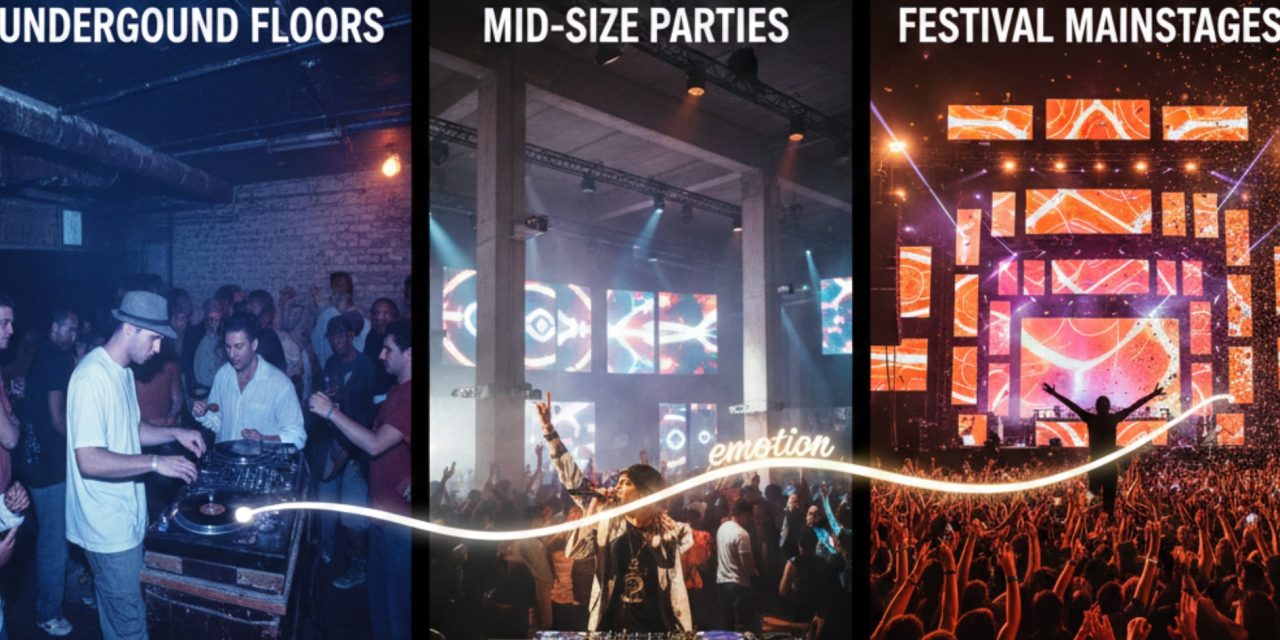
Electronic dance music has always loved reinvention, sometimes changing outfits faster than its BPM count. What began in dimly lit warehouses and sweat-soaked underground clubs slowly grew into a global spectacle of LED screens, fireworks, and meticulously timed drops. Yet amid all that scale and precision, something deeply human kept pushing its way forward: emotion.
Soulful EDM emerged as the genre’s reminder that dance music isn’t only about moving bodies, but about stirring feelings too. Its rise from niche circles to mainstage prominence reflects a shift where vulnerability became just as powerful as volume.
The Roots: House, Trance, and the Pursuit of Emotion
To understand soulful EDM, it helps to rewind to the late 1980s and early 1990s. Chicago house and Detroit techno laid the foundation, offering rhythm, groove, and cultural rebellion. But as electronic music traveled to Europe, particularly the UK and Germany, trance and progressive house began stretching those ideas further. These styles emphasized long builds, melodic tension, and euphoric releases designed to feel almost cinematic.
Artists like Sasha and Digweed transformed DJ sets into emotional journeys rather than collections of tracks. Early trance pioneers such as Tiësto crafted anthems that felt expansive and spiritual, pulling listeners into shared moments of release. These records weren’t just tools for the dancefloor. They told stories, carried moods, and hinted at a future where EDM could speak directly to the heart.
The Vocal Renaissance
By the early 2000s, EDM was branching in multiple directions at once. Electro house and dubstep leaned into aggression and sonic impact, dominating certain festival stages. At the same time, another movement quietly gained momentum, one that leaned into warmth, vulnerability, and storytelling. Vocal-driven electronic music began to reshape how audiences connected with tracks.
Artists such as Above & Beyond, Kaskade, and Armin van Buuren placed vocals front and center, turning songs into emotional narratives. Above & Beyond’s Sun & Moon became a global heartbreak anthem, proving that electronic music could capture intimacy without losing scale. Kaskade’s Atmosphere offered something closer to transcendence than escapism. These tracks didn’t just fill dancefloors; they lingered long after the lights came on.
This era marked EDM’s vocal renaissance, where voices weren’t decorative elements but emotional anchors. It was here that soulful EDM truly found its identity, blending electronic precision with raw human feeling.
Conclusion
The evolution of soulful EDM mirrors the evolution of its audience. As listeners matured, they began craving more than flawless drops and predictable buildups. They wanted connection, vulnerability, and moments that felt real, even inside massive festival crowds.
Soulful EDM answered that call by bridging underground roots with mainstage ambition, proving that emotion scales just as powerfully as sound. Its journey isn’t finished, but its impact is already unmistakable, reshaping what electronic music can be when it dares to feel.
How did a sound born in dark clubs end up moving thousands of people in open-air festival crowds? Follow the full journey of soulful EDM’s rise, its voices, and its emotional power on DLK Soulful EDM, where the genre’s past and future collide.
