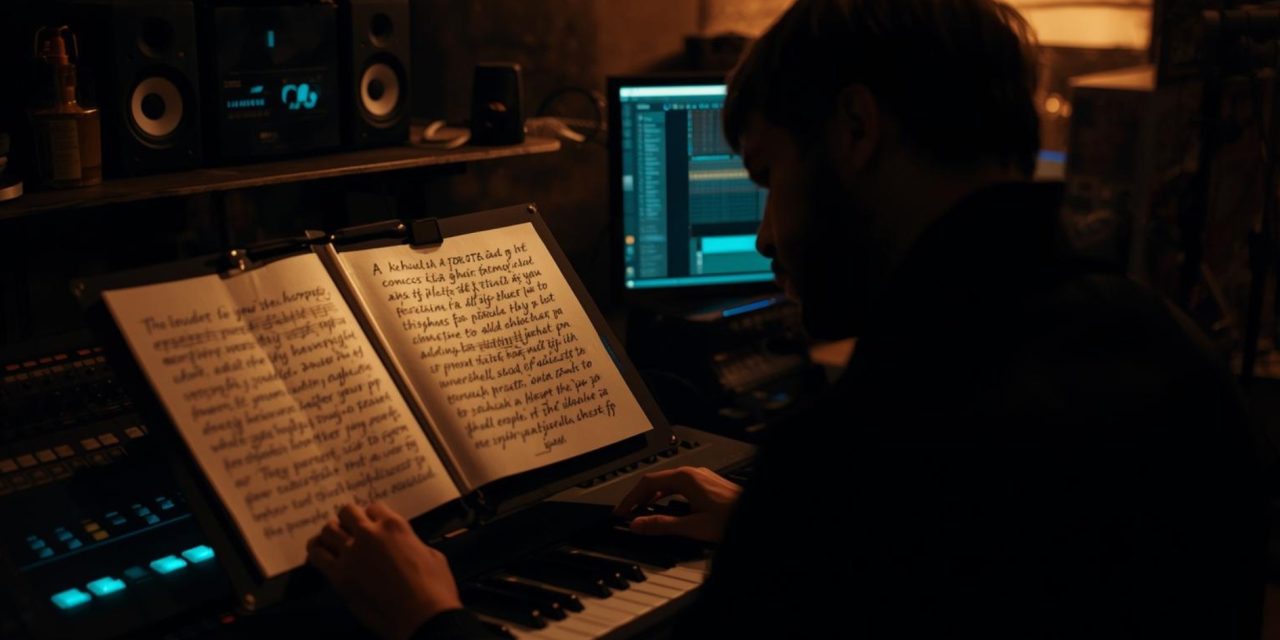
Emotional storytelling in music rarely happens by accident, even when it feels effortless to the listener. That song that “randomly” made someone tear up during a late-night drive was likely engineered with care, intention, and a few hard creative decisions.
Top producers understand that emotion doesn’t come from doing more, but from doing the right things at the right moments. They blend musical structure with human experience, shaping songs that feel personal without sounding forced. When done well, the result isn’t just a track you hear, but a story you carry with you.
Melodic Composition as Emotional Architecture
At the core of emotional storytelling lies melodic composition. Producers often rely on proven chord progressions, not out of laziness, but because certain harmonic movements consistently trigger emotional responses. The I–V–vi–IV progression is a classic example, widely used for its ability to evoke warmth, hope, and bittersweet nostalgia.
Intervals also play a major role in shaping emotional tone. The minor sixth, for instance, frequently introduces a sense of longing or sadness, as heard in Radiohead’s “Creep.” In contrast, ascending melodic lines often signal hope and release, a technique Coldplay uses effectively in “Fix You.” These melodic decisions guide the listener’s emotional journey before a single lyric is even processed.
Producers deepen this impact through layering. Pairing piano with strings, or subtle pads beneath a lead melody, adds emotional texture without overcrowding the mix. Dynamic shifts matter too. Gradual builds, intentional restraint, and carefully timed drops allow emotion to rise naturally, pulling listeners further into the narrative rather than overwhelming them too early.
Lyric Writing That Feels Personal but Universal
While melodies set the emotional tone, lyrics give the story its voice. Many artists draw from personal experiences to create authenticity, a method Ed Sheeran frequently uses to ground his songwriting. However, the goal isn’t confession for its own sake. It’s translating personal moments into emotions others recognize.
Strong lyric writing often relies on vivid imagery and emotional anchors. Taylor Swift excels at blending specific memories with universal themes, allowing listeners to see themselves in her stories. Perspective also matters. Songs like Lord Huron’s “The Night We Met” demonstrate how nostalgia and reflection can be amplified by choosing the right narrative angle.
Structure plays a critical role as well. Bridges that shift perspective or heighten tension can dramatically deepen emotional payoff. When lyrics and structure align, the story unfolds naturally, making the emotion feel earned rather than manufactured.
Conclusion
Emotional storytelling is where technique and humanity meet. Top producers understand that compelling stories are built through intentional melodic choices and honest, well-crafted lyrics. By balancing structure with vulnerability, they create music that resonates beyond the first listen. These are the songs people return to, not for the sound alone, but for how they make them feel.
Which techniques do you notice first when a song genuinely moves you, the melody or the story behind the words? At DLK Soulful EDM, we dive into how emotion, storytelling, and electronic music come together to create lasting connections.
