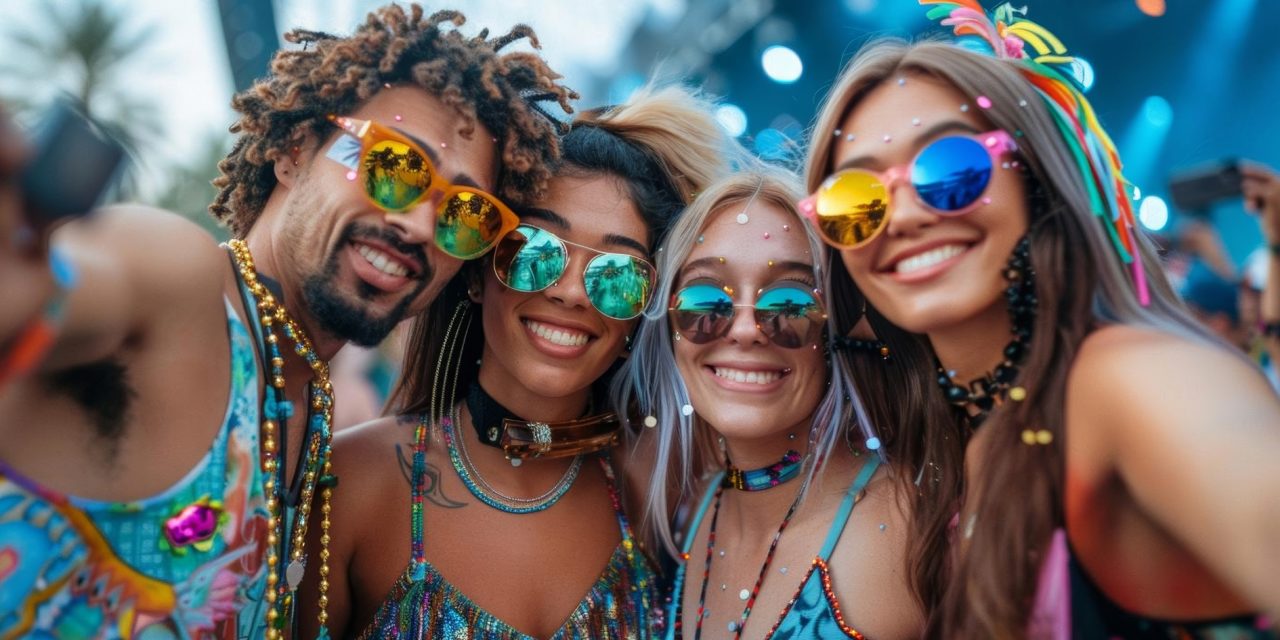
Festival season isn’t just about chasing stages and losing your voice by Sunday night. It’s where music quietly dictates fashion choices, even when we pretend we “just threw this outfit together.”
What we wear to festivals has always mirrored the sound, the mood, and the values behind the music itself. From ancient communal gatherings to modern multi-day events, festival fashion has evolved into a visual language. It speaks before the beat even drops, blending identity, comfort, and cultural expression into one carefully unplanned look.
Roots of Festival Fashion and Cultural Expression
Long before fringe jackets and statement boots became festival staples, communal celebrations already linked art, identity, and appearance. Ancient festivals like the Greek Dionysia and Roman Saturnalia weren’t just performances. They were shared experiences built around storytelling, music, and collective expression.
Participants gathered for dramatic competitions, feasts, and rituals, often dressing in ways that reflected celebration rather than routine life. These events reinforced the idea that festivals are moments where normal rules soften. Clothing became part of the atmosphere, not an afterthought.
Fast forward to the twentieth century, and festivals like Woodstock in 1969 and Glastonbury in 1970 revived this spirit. Music became a form of protest, freedom, and self-definition. Fashion followed closely behind. Flowy silhouettes, bold patterns, and DIY styling weren’t trends chasing approval. They were statements shaped by sound, community, and shared ideals.
Today’s festival fashion still carries these roots. It reflects belonging, creativity, and the freedom to experiment without explanation.
Modern Festival Trends Shaped by Music and Values
Contemporary festival fashion is no longer just about looking good in photos. It’s increasingly influenced by values that define today’s music culture. Inclusivity, sustainability, and wellness now play central roles in how people dress and experience festivals.
A 2023 Festival Insights study showed that seventy-five percent of festival-goers prioritize eco-friendly practices. This shift shows up in clothing choices too. Recycled fabrics, thrifted outfits, and slow-fashion pieces are becoming festival essentials. Events like Glastonbury, which committed to eliminating single-use plastics, have pushed both organizers and attendees to think more intentionally.
Music festivals also influence comfort-driven fashion. With wellness spaces, yoga tents, and long performance days, attendees now favor breathable fabrics, functional footwear, and layered looks. Festivals like Coachella and Tomorrowland have reinforced this blend of style and practicality, proving that fashion doesn’t have to suffer for the sake of self-expression.
Technology has joined the mix as well. Cashless payments, app-based schedules, and interactive stages encourage lighter, smarter outfit choices. Fashion adapts, as it always has, to how music is experienced.
Conclusion
Festival fashion has never existed in isolation. It grows from music, history, and the values shaping each generation of listeners. What began as communal celebration evolved into counterculture expression and now reflects mindful living and individuality. Every outfit choice tells a story influenced by sound, space, and shared energy. When music changes, style listens closely.
What does your festival outfit say about the music and values you’re showing up for? At DLK Soulful EDM, we explore how fashion choices echo culture, sound, and the moments that bring people together.
