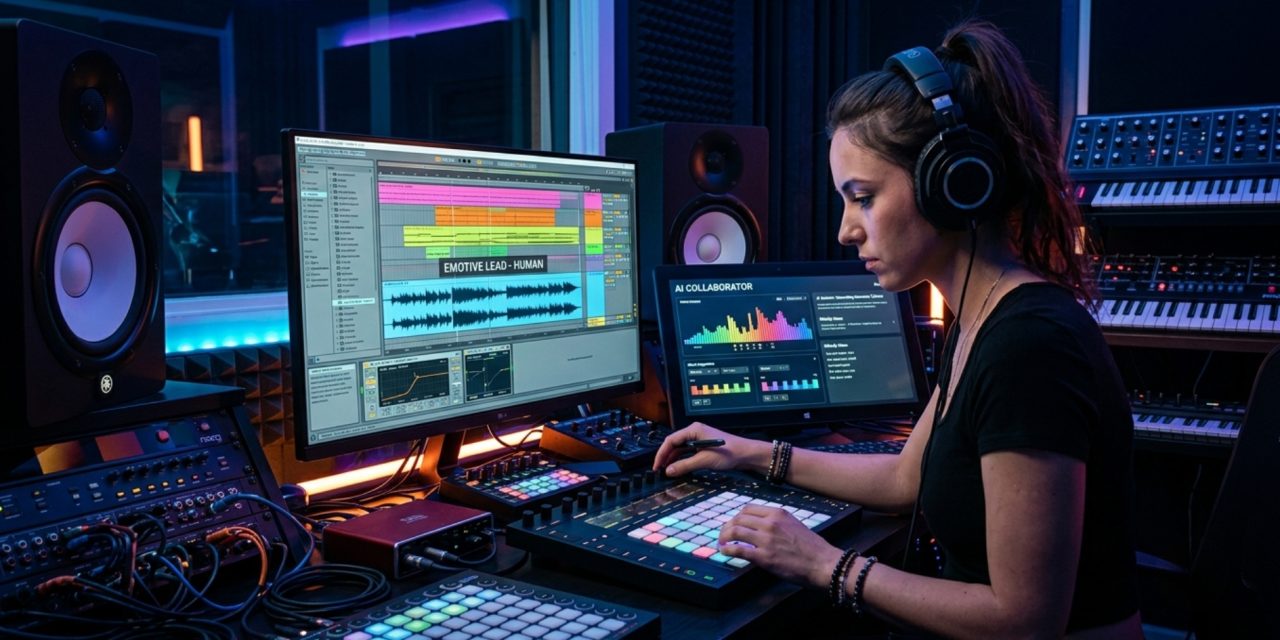
EDM has always evolved through experimentation, but the next shift may feel less mechanical and far more emotional than people expected. Instead of simply generating beats faster, AI is beginning to influence how electronic music responds to mood, atmosphere, and even human feeling itself.
What makes this moment fascinating is that producers are no longer treating AI as a gimmick. They are starting to use it as a creative collaborator — one capable of generating unexpected ideas while still relying on human instinct to shape the final emotional experience.
Human Artists and AI Are Starting to Create Together
Some of the most interesting AI experiments in EDM are not replacing artists at all. Instead, they are creating new forms of collaboration between human creativity and machine learning.
Projects like YACHT’s Emo album showed how AI-generated lyrics and melodies could blend with human production instincts to create something surprisingly compelling. Rather than removing emotion from the process, these collaborations sparked curiosity about how technology might expand creative possibilities instead of limiting them.
Artists are increasingly exploring AI tools for melody generation, lyrical inspiration, arrangement ideas, and sound experimentation. These systems can process enormous amounts of musical information quickly, giving producers new directions they may never have considered on their own.
Still, the emotional center usually comes from the artist, not the algorithm. AI may generate ideas, but human producers decide which moments feel meaningful enough to keep.
That balance between technology and instinct could become one of the defining characteristics of future EDM.
Emotion-Driven Music Could Redefine Listening Experiences
One of the most fascinating possibilities involves AI systems that adapt music in real time based on listener emotion. Instead of static tracks, future EDM experiences may respond dynamically to how audiences actually feel.
Platforms experimenting with emotion-driven AI already analyze listener reactions through mood patterns, biometric data, and engagement behavior. In theory, music could eventually adjust tempo, intensity, atmosphere, or melodic tension while someone is listening.
Imagine a live set that subtly changes energy depending on crowd emotion, or playlists that evolve alongside your mood during a late-night drive. That kind of responsiveness could make EDM feel more immersive and emotionally personal than ever before.
At the same time, many listeners still crave imperfections, unpredictability, and emotional vulnerability from real artists. No matter how advanced AI becomes, audiences continue connecting most strongly to music that feels lived-in rather than mechanically optimized.
That tension between emotional precision and human imperfection may shape the next era of electronic music.
Conclusion
AI is opening new creative possibilities inside EDM, from collaborative songwriting to emotionally adaptive listening experiences. These technologies could completely reshape how artists create, perform, and connect with audiences over the next decade.
Still, the future of EDM will likely depend on balance. Technology may enhance emotional experiences, but human intuition remains the part listeners remember most. The producers who thrive will probably be the ones who use AI as a creative partner without losing the emotional soul that makes electronic music feel alive.
Would you actually enjoy EDM more if playlists and live sets adapted to your mood in real time — or would that make music feel too artificial?
Keep exploring where emotion, technology, and electronic music collide with DLK Soulful EDM.
