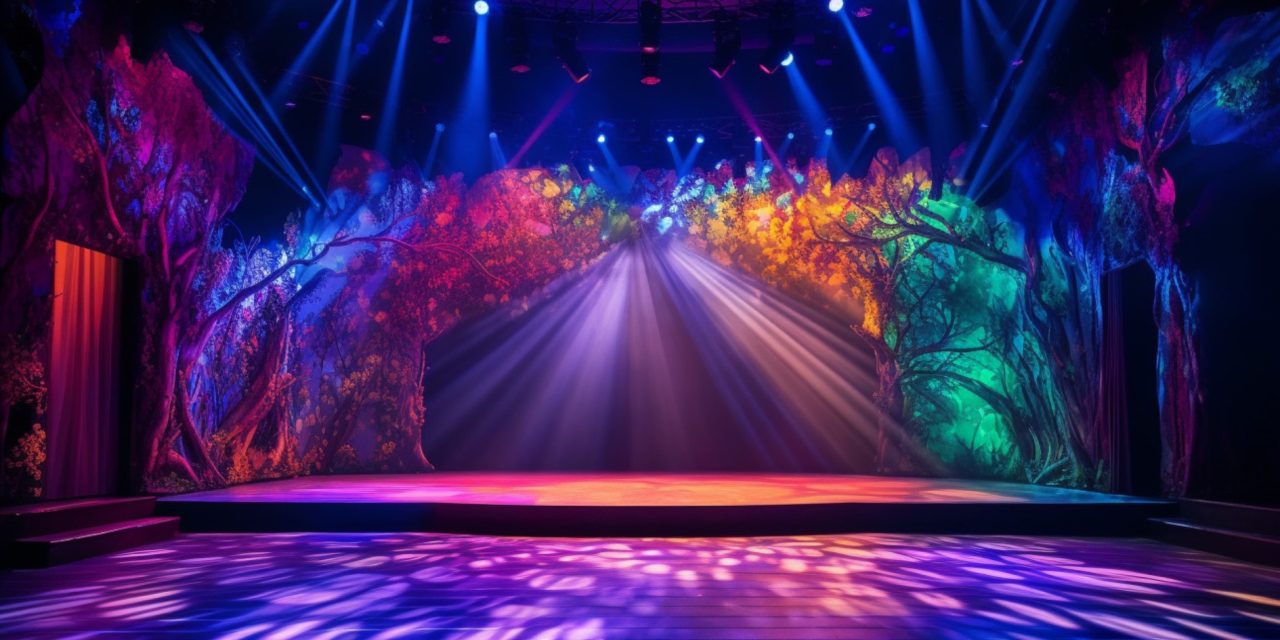
There’s something oddly comforting about walking into a theater and feeling the room whisper, “You’re not in Kansas anymore.” That sensory shift doesn’t happen by accident. It’s the result of stage drops—giant storytelling canvases that quietly do half the narrative heavy lifting while the actors take the bow.
Stage drops combine old-world craftsmanship with modern tech, shaping everything from dreamlike forests to dystopian ruins. And as productions demand faster changes, richer visuals, and deeper audience immersion, these backdrops have evolved far beyond simple painted cloth. This article explores what stage drops are, where they came from, and how their artistry and engineering continue to redefine live performance.
Definition and Purpose
Stage drops serve one mission: transform empty space into an emotional world. They establish location, deepen mood, and support narrative flow—often more powerfully than the audience realizes. A single backdrop can shift a scene from whimsical to haunting, or from pastoral calm to dramatic tension.
Think of modern productions of A Midsummer Night’s Dream: lush, hand-painted forest drops create an enchanted world before anyone speaks a line. When paired with digital projection tools, these scenic elements become even more dynamic. A static moon can shimmer. A still forest can “breathe.” Directors blend traditional artistry with modern tech to polish transitions, reflect tone changes, and create immersive environments that pull audiences deeper into the story.
This hybrid approach makes stage drops not just decoration but active storytelling partners—quietly commanding attention while remaining perfectly integrated into the performance.
Historical Context
Stage drops have been redefining theatrical space for centuries. Their roots stretch back to the 16th century, when early theater companies used simple painted scenes to convey setting.
Over time, these backdrops evolved into more intricate works, culminating in the 19th century’s explosion of scenic artistry. Productions like Wagner’s Ring Cycle used massive canvases and advanced perspective painting to create immersive, near-cinematic worlds long before cinema existed.
The 20th century introduced a technical revolution. Automated drops enabled rapid scene changes, while early digital projections allowed imagery to move with the story. Musicals like Phantom of the Opera pushed these innovations forward, integrating motion, light, and atmosphere into the backdrop itself.
Today, LED screens and high-resolution media servers have reshaped expectations again. Stage drops no longer simply hang—they shimmer, shift, animate, and react, enabling designers to build entire worlds with a level of precision and flexibility that was once impossible. The blend of durability, visual power, and technological nuance continues to expand what stagecraft can achieve.
Conclusion
Stage drops remain a cornerstone of theatrical storytelling, evolving from painted canvases to hybrid digital environments capable of transforming a stage in seconds.
Their blend of craft, engineering, and imagination shapes how audiences interpret space, emotion, and narrative. Whether hand-painted or LED-driven, these backdrops anchor performances with clarity and wonder, giving every production a world to stand on—and every viewer a world to step into.
How will your next production build an atmosphere that audiences remember long after the curtain falls? Discover more creative staging insights, visual design tips, and performance-driven storytelling ideas only at DLK Soulful EDM.
