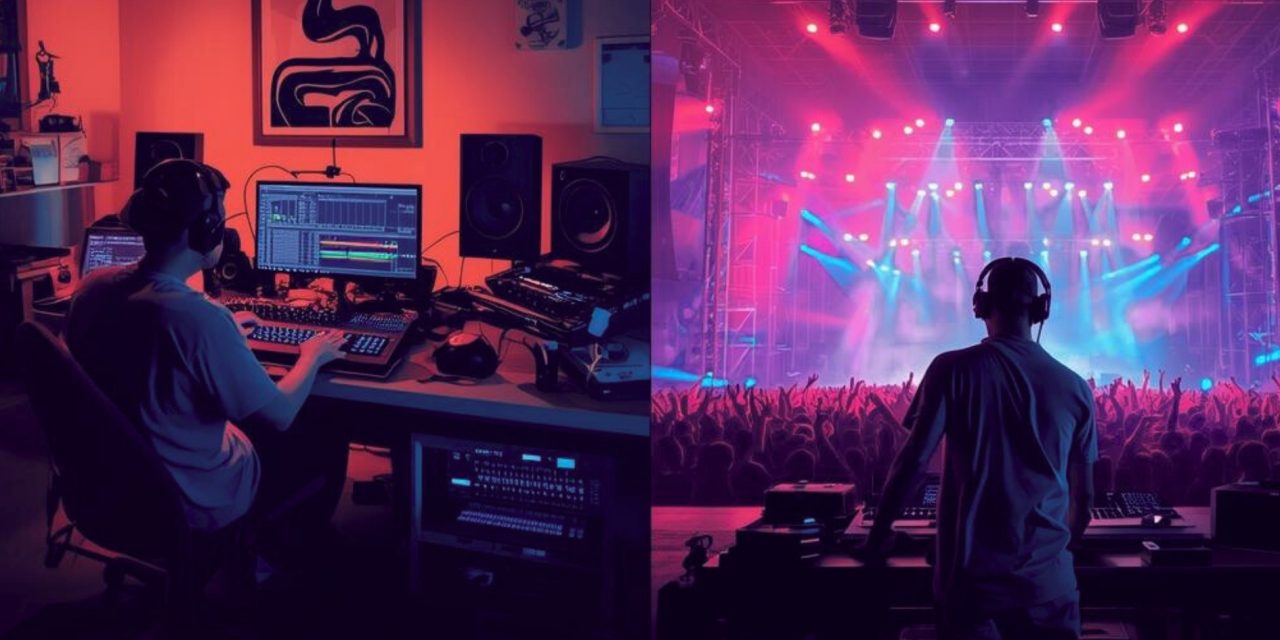
The phrase “bedroom producer” used to sound like a polite way of saying “not quite there yet.”
Now, it’s practically a business model. In the age of SoundCloud drops, algorithm roulette, and late-night Ableton sessions, some of EDM’s biggest names started exactly where many producers still are: small rooms, limited gear, and an unreasonable amount of ambition. These case studies aren’t fairy tales. Rather, they’re blueprints, with a few hard lessons baked in.
Notable Artists and the Paths They Took
Marshmello and Illenium are often cited because their stories reflect two very different — yet equally strategic — routes out of the bedroom and into global recognition.
Marshmello leaned heavily into anonymity and branding early on, using SoundCloud to test viral potential through remixes before pairing the music with a distinctive visual identity. That helmet wasn’t a gimmick; it was a marketing decision that made the project instantly recognizable in crowded feeds.
Illenium, on the other hand, focused on emotional storytelling and consistency. By releasing music steadily across Spotify and Apple Music, he built a catalog that rewarded long-term listeners rather than chasing short-term hype. Both artists relied on accessible production tools like FL Studio and Ableton Live, proving that success came less from exotic gear and more from disciplined experimentation and sound refinement.
What tied their journeys together was platform fluency. They understood where their audiences lived online and showed up there intentionally, whether through behind-the-scenes clips, remix culture, or collaborative releases that expanded reach without diluting identity.
What Emerging Producers Can Actually Learn From Them
The most practical lesson from successful bedroom producers isn’t “go viral” — it’s stay visible while improving quietly. Networking today doesn’t require industry mixers; it happens in comment sections, Discord servers, remix contests, and collaborative playlists. Consistent engagement builds familiarity long before formal recognition arrives.
Equally important is skill development. Marshmello and Illenium didn’t plateau after early traction — they doubled down on mixing, mastering, and arrangement clarity. Regularly experimenting with new workflows in Ableton Live or FL Studio, following targeted tutorials, and revisiting older tracks with sharper ears helped their sound evolve alongside their audience.
Fan connection also mattered. Simple actions — responding to comments, previewing works in progress, or hosting virtual listening sessions — turned passive listeners into invested supporters. In a saturated EDM landscape, that relationship often becomes the difference between momentum and stagnation.
The Bottom Line
Bedroom success stories aren’t about luck or overnight fame. They show how structure, patience, and creative intent can scale even the most modest setup into a sustainable career. The takeaway isn’t to copy someone else’s path — it’s to recognize that strategy, not studio size, drives growth.
Which part of the bedroom-to-festival journey feels most challenging right now for emerging EDM producers? Share your perspective in the comments and keep tracking the real forces shaping electronic music culture at DLK Soulful EDM.
